Principle of New-Humanism

by Ac. Krtashivananda Avt.

  1. Senza-titolo-1‘Having’ and ‘being’ are two fundamental modes of experience, the respective strenghts of which determine the difference between character of individuals and various types of social character.

In the present period of crisis, two ways of existance are struggling for the spirit of humankind. First – and dominant in modern industrial society can be called the ‘having’ mode, which concentrates on material possessions and power within and is based on greed, envy and agressiveness. The second-and the alternative way is what can be called the ‘being’ mode, which manifests itself in the pleasure of shared experience and truly productive rather than wasteful activity, and is rooted in love and ascendency of human over material values.

  1. The dynamics of ideas runs parallel to the process of social evolution, the  two influencing each other mutually.

In no particular point of the process human evolution, can a direct causal relation be established between historical events and the movement of ideas. (“idea” is here used in the common philosophical sense of ideology or systems of ideas.) Cultural patterns and ethical values are not mere ideological superstructures of established economic relations, but historically determined—by the logic of the history of ideas that evolved from inner spirit.

Experience drove us to examine current ideas and cherised ideals critically and  reject the stereotyped values that is deduced from mechanistic cosmology of materialism. Then to put effort  to evolve new ideas and ideals, based on new humanistic ideology as guide and inspiration for the future.

  1. A social renaissance can come only through the endevour to educate the people as regards the principles of freedom and rational cooperative living.

Social revolution requires, in rapidly increasing number of men of the new renaissance and progressively expanding system of peoples committees and an organic coordination of both. The programme of revolution will similarly based on the principle of freedom, reason, security for all and social harmony. It will mean elimination of every form of monopoly and unethical authoritive control in the regulation of every strata of social, religious and political life. Simultaneosly, economic liberation of the masses from monopoly control is an essential condition for their advancing towards the goal of freedom. To achieve this the masses need to be educated to make them conscious of their rights and duties both in individual and collective sense.

  1. New Humanism advocates reconstruction of the world as a  commonwealth and fretarnity of free men(sic), by the spiritually emancipated moral men(sic):

Moral sanction , after all, is the greatest sanction. The gurantee of democracy is not law but the moral conscience of the majority in power. Dictatorship may also claim to have a moral sanction. But group morality is a doubtful guarantee against the temptation of power. Values operate through individuals. Therefore, a government composed of spiritualy free individuals, accountable in the first place, to their respective conscience, is the only possible gurantee for greatest good to the greatest number. Democracy must have that philosophical reorientation if it is to survive the present crisis the power onslaught of dictatorship and bureaucratic character.

Democracy can only be successful when residuary power is vested in a council of state representing men(sic) of science, intelligence, integrity, wisdom and moral excellence; men who as a rule, keep aloof from rough and tumble of politics and therefore not be found among professional politicians.


Monsanto and the Bio-Tech Conglomerates: Sowing the Seeds of Famine in Ethiopia

By Prof Michel Chossudovsky
Global Research, May 23, 2014
Author’s note

Based on research conducted in the 1990s, this article was first published by The Ecologist in September 2000. It was subsequently incorporated into the Second edition of The Globalization of Poverty and the New World Order, Global Research, Montreal, 2003.

The research focussed on how GMO seeds were used as of the mid-1990s to destabilize the agricultural cycle in Ethiopia. This diabolical “free market” agenda was a dress rehearsal for a agri-bio-tech conglomerates’ assault led by Monsanto on peasant economies in all major regions of the World.

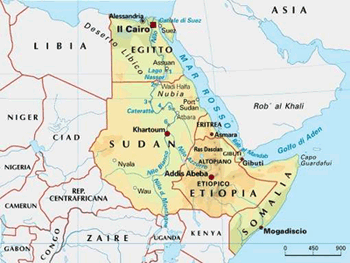
Michel Chossudovsky, May 23, 2014cartina

The “economic therapy” imposed under IMF-World Bank jurisdiction is in large part responsible for triggering famine and social devastation in Ethiopia and the rest of sub-Saharan Africa, wreaking the peasant economy and impoverishing millions of people.

With the complicity of branches of the US government, it has also opened the door for the appropriation of traditional seeds and landraces by US biotech corporations, which behind the scenes have been peddling the adoption of their own genetically modified seeds under the disguise of emergency aid and famine relief.

Moreover, under WTO rules, the agri-biotech conglomerates can manipulate market forces to their advantage as well as exact royalties from farmers. The WTO provides legitimacy to the food giants to dismantle State programmes including emergency grain stocks, seed banks, extension services and agricultural credit, etc.), plunder peasant economies and trigger the outbreak of periodic famines.

Crisis in the Horn

More than 8 million people in Ethiopia – representing 15% of the country’s population – had been locked into

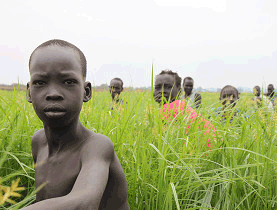
In Etiopia molti bambini lavorano nelle tenute agricole di investitori stranieri per 80 centesimi al giorno (Philipp Hedemann) swissinfo.ch - Swiss Broadcasting Corporation

In Etiopia molti bambini lavorano nelle tenute agricole di investitori stranieri per 80 centesimi al giorno (Philipp Hedemann)
swissinfo.ch – Swiss Broadcasting Corporation

“famine zones”. Urban wages have collapsed and unemployed seasonal farm workers and landless peasants have been driven into abysmal poverty. The international relief agencies concur without further examination that climatic factors are the sole and inevitable cause of crop failure and the ensuing humanitarian disaster. What the media tabloids fails to disclose is that – despite the drought and the border war with Eritrea – several million people in the most prosperous agricultural regions have also been driven into starvation. Their predicament is not the consequence of grain shortages but of “free markets” and “bitter economic medicine” imposed under the IMF-World Bank sponsored Structural Adjustment Programme (SAP).

Ethiopia produces more than 90% of its consumption needs. Yet at the height of the crisis, the nationwide food deficit for 2000 was estimated by the Food and Agriculture Organization (FAO) at 764,000 metric tons of grain representing a shortfall of 13 kilos per person per annum.1 In Amhara, grain production (1999-2000) was twenty percent in excess of consumption needs. Yet 2.8 million people in Amhara (representing 17% of the region’s population) became locked into famine zones and are “at risk” according to the FAO. 2 Whereas Amhara’s grain surpluses were in excess of 500,000 tons (1999-2000), its “relief food needs” had been tagged by the international community at close to 300,000 tons.3 A similar pattern prevailed in Oromiya, the country’s most populated state where 1.6 million people were classified “at risk”, despite the availability of more than 600,000 metric tons of surplus grain.4 In both these regions, which include more than 25% of the country’s population, scarcity of food was clearly not the cause of hunger, poverty and social destitution. Yet no explanations are given by the panoply of international relief agencies and agricultural research institutes.

The Promise of the “Free Market”

In Ethiopia, a transitional government came into power in 1991 in the wake of a protracted and destructive civil war. After the pro-Soviet Dergue regime of Colonel Mengistu Haile Mariam was unseated, a multi-donor financed Emergency Recovery and Reconstruction Project (ERRP) was hastily put in place to deal with an external debt of close to 9 billion dollars that had accumulated during the Mengistu government. Ethiopia’s outstanding debts with the Paris Club of official creditors were rescheduled in exchange for far-reaching macro-economic reforms. Upheld by US foreign policy, the usual doses of bitter IMF economic medicine were prescribed. Caught in the straightjacket of debt and structural adjustment, the new Transitional Government of Ethiopia (TGE), led by the Ethiopian People’s Revolutionary Democratic Front (EPRDF) – largely formed from the Tigrean People’s Liberation Front (PLF) – had committed itself to far-reaching “free market reforms”, despite its leaders’ Marxist leanings. Washington soon tagged Ethiopia alongside Uganda as Africa’s post Cold War free market showpiece.

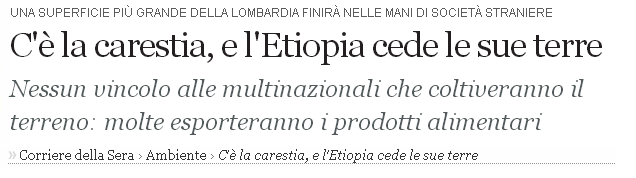
Corriere-Terre

While social budgets were slashed under the structural adjustment programme (SAP), military expenditure – in part financed by the gush of fresh development loans – quadrupled since 1989.5 With Washington supporting both sides in the Eritrea-Ethiopia border war, US arms sales spiralled. The bounty was being shared between the arms manufacturers and the agribusiness conglomerates. In the post-Cold War era, the latter positioned themselves in the lucrative procurement of emergency aid to war-torn countries. With mounting military spending financed on borrowed money, almost half of Ethiopia’s export revenues was earmarked to meet debt-servicing obligations.

A Policy Framework Paper (PFP) stipulating the precise changes to be carried out in Ethiopia had been carefully drafted in Washington by IMF and World Bank officials on behalf of the transitional government, and was forwarded to Addis Ababa for the signature of the Minister of Finance. The enforcement of severe austerity measures virtually foreclosed the possibility of a meaningful post-war reconstruction and the rebuilding of the country’s shattered infrastructure. The creditors demanded trade liberalization and the full-scale privatization of public utilities, financial institutions, State farms and factories. Civil servants including teachers and health workers were fired, wages were frozen and the labor laws were rescinded to enable State enterprises “to shed their surplus workers”. Meanwhile, corruption became rampant. State assets were auctioned off to foreign capital at bargain prices and Price Waterhouse Cooper was entrusted with the task of coordinating the sale of State property.

In turn, the reforms had led to the fracture of the federal fiscal system. Budget transfers to the State governments were slashed leaving the regions to their own devices. Supported by several donors, “regionalization” was heralded as a “devolution of powers from the federal to the regional governments”. The Bretton Woods institutions knew exactly what they were doing. In the words of the IMF, “[the regions] capacity to deliver effective and efficient development interventions varies widely, as does their capacity for revenue collection”. 6

Wrecking the Peasant Economy

Patterned on the reforms adopted in Kenya in 1991 (see Box 9.1 ), agricultural markets were wilfully manipulated on behalf of the agribusiness conglomerates. The World Bank demanded the rapid removal of price controls and all subsidies to farmers. Transportation and freight prices were deregulated serving to boost food prices in remote areas affected by drought. In turn, the markets for farm inputs including fertiliser and seeds were handed over to private traders including Pioneer Hi-Bred International which entered into a lucrative partnership with Ethiopia Seed Enterprise (ESE), the government’s seed monopoly.7

At the outset of the reforms in 1992, USAID under its Title III program “donated” large quantities of US fertilizer “in exchange for free market reforms”:

[V]arious agricultural commodities [will be provided] in exchange for reforms of grain marketing… and [the] elimination of food subsidies…The reform agenda focuses on liberalization and privatization in the fertilizer and transport sectors in return for financing fertilizer and truck imports…. These program initiatives have given us [an] “entrée” …in defining major [policy] issues… 8

While the stocks of donated US fertiliser were rapidly exhausted; the imported chemicals contributed to displacing local fertiliser producers. The same companies involved in the fertiliser import business were also in control of the domestic wholesale distribution of fertiliser using local level merchants as intermediaries.

Increased output was recorded in commercial farms and in irrigated areas (where fertilizer and high yielding seeds had been applied). The overall tendency, however, was towards greater economic and social polarisation in the countryside, marked by significantly lower yields in less productive marginal lands occupied by the poor peasantry. Even in areas where output had increased, farmers were caught in the clutch of the seed and fertilizer merchants.

In 1997, the Atlanta based Carter Center – which was actively promoting the use of biotechnology tools in maize breeding – proudly announced that “Ethiopia [had] become a food exporter for the first time”.9 Yet in a cruel irony, the donors ordered the dismantling of the emergency grain reserves (set up in the wake of the 1984-85 famine) and the authorities acquiesced.

Instead of replenishing the country’s emergency food stocks, grain was exported to meet Ethiopia’s debt servicing obligations. Close to one million tons of the 1996 harvest was exported, an amount which would have been amply sufficient (according to FAO figures) to meet the 1999-2000 emergency. In fact the same food staple which had been exported (namely maize) was re-imported barely a few months later. The world market had confiscated Ethiopia’s grain reserves.

In return, US surpluses of genetically engineered maize (banned by the European Union) were being dumped on the horn of Africa in the form of emergency aid. The US had found a convenient mechanism for “laundering its stocks of dirty grain”. The agribusiness conglomerates not only cornered Ethiopia’s commodity exports, they were also involved in the procurement of emergency shipments of grain back into Ethiopia. During the 1998-2000 famine, lucrative maize contracts were awarded to giant grain merchants such as Archer Daniels Midland (ADM) and Cargill Inc. 10

Laundering America’s GM Grain Surpluses

US grain surpluses peddled in war-torn countries also served to weaken the agricultural system. Some 500,000 tons of maize and maize products were “donated” in 1999-2000 by USAID to relief agencies including the World Food Programme (WFP) which in turn collaborates closely with the US Department of Agriculture. At least 30% of these shipments (procured under contract with US agribusiness firms) were surplus genetically modified grain stocks. 11

Boosted by the border war with Eritrea and the plight of thousands of refugees, the influx of contaminated food aid had contributed to the pollution of Ethiopia’s genetic pool of indigenous seeds and landraces. In a cruel irony, the food giants were at the same time gaining control – through the procurement of contaminated food aid – over Ethiopia’s seed banks. According to South Africa’s Biowatch: “Africa is treated as the dustbin of the world…To donate untested food and seed to Africa is not an act of kindness but an attempt to lure Africa into further dependence on foreign aid.” 12

Moreover, part of the “food aid” had been channelled under the “food for work” program which served to further discourage domestic production in favour of grain imports. Under this scheme, impoverished and landless farmers were contracted to work on rural infrastructural programmes in exchange for “donated” US corn.

Meanwhile, the cash earnings of coffee smallholders plummeted. Whereas Pioneer Hi-Bred positioned itself in seed distribution and marketing, Cargill Inc established itself in the markets for grain and coffee through its subsidiary Ethiopian Commodities.12 For the more than 700,000 smallholders with less than 2 hectares that produce between 90 and 95% of the country’s coffee output, the deregulation of agricultural credit combined with low farmgate prices of coffee had triggered increased indebtedness and landlessness, particularly in East Gojam (Ethiopia’s breadbasket).

Biodiversity up for Sale

The country’s extensive reserves of traditional seed varieties (barley, teff, chick peas, sorghum, etc) were being appropriated, genetically manipulated and patented by the agribusiness conglomerates: “Instead of compensation and respect, Ethiopians today are …getting bills from foreign companies that have “patented” native species and now demand payment for their use.”13 The foundations of a “competitive seed industry” were laid under IMF and World Bank auspices.14 The Ethiopian Seed Enterprise (ESE), the government’s seed monopoly joined hands with Pioneer Hi-Bred in the distribution of hi-bred and genetically modified (GM) seeds (together with hybrid resistant herbicide) to smallholders. In turn, the marketing of seeds had been transferred to a network of private contractors and “seed enterprises” with financial support and technical assistance from the World Bank. The “informal” farmer-to-farmer seed exchange was slated to be converted under the World Bank programme into a “formal” market oriented system of “private seed producer-sellers.” 15

In turn, the Ethiopian Agricultural Research Institute (EARI) was collaborating with the International Maize and Wheat Improvement Center (CIMMYT) in the development of new hybrids between Mexican and Ethiopian maize varieties.16 Initially established in the 1940s by Pioneer Hi-Bred International with support from the Ford and Rockefeller foundations, CIMMYT developed a cosy relationship with US agribusiness. Together with the UK based Norman Borlaug Institute, CIMMYT constitutes a research arm as well as a mouthpiece of the seed conglomerates. According to the Rural Advancement Foundation (RAFI) “US farmers already earn $150 million annually by growing varieties of barley developed from Ethiopian strains. Yet nobody in Ethiopia is sending them a bill.” 17

Impacts of Famine

The 1984-85 famine had seriously threatened Ethiopia’s reserves of landraces of traditional seeds. In response to the famine, the Dergue government through its Plant Genetic Resource Centre –in collaboration with Seeds of Survival (SoS)– had implemented a programme to preserve Ethiopia’s biodiversity.18 This programme – which was continued under the transitional government – skilfully “linked on-farm conservation and crop improvement by rural communities with government support services”. 19 An extensive network of in-farm sites and conservation plots was established involving some 30,000 farmers. In 1998, coinciding chronologically with the onslaught of the 1998-2000 famine, the government clamped down on seeds of Survival (SoS) and ordered the programme to be closed down. 20

The hidden agenda was to eventually displace the traditional varieties and landraces reproduced in village-level nurseries. The latter were supplying more than 90 percent of the peasantry through a system of farmer-to-farmer exchange. Without fail, the 1998-2000 famine led to a further depletion of local level seed banks: “The reserves of grains [the farmer] normally stores to see him through difficult times are empty. Like 30,000 other households in the [Galga] area, his family have also eaten their stocks of seeds for the next harvest.”21 And a similar process was unfolding in the production of coffee where the genetic base of the arabica beans was threatened as a result of the collapse of farmgate prices and the impoverishment of small-holders.

In other words, the famine – itself in large part a product of the economic reforms imposed to the advantage of large corporations by the IMF, World Bank and the US Government – served to undermine Ethiopia’s genetic diversity to the benefit of the biotech companies. With the weakening of the system of traditional exchange, village level seed banks were being replenished with commercial hi-bred and genetically modified seeds. In turn, the distribution of seeds to impoverished farmers had been integrated with the “food aid” programmes. WPF and USAID relief packages often include “donations” of seeds and fertiliser, thereby favouring the inroad of the agribusiness-biotech companies into Ethiopia’s agricultural heartland. The emergency programs are not the “solution” but the “cause” of famine. By deliberately creating a dependency on GM seeds, they had set the stage for the outbreak of future famines.

This destructive pattern – invariably resulting in famine – is replicated throughout Sub-Saharan Africa. From the onslaught of the debt crisis of the early 1980s, the IMF-World Bank had set the stage for the demise of the peasant economy across the region with devastating results. Now, in Ethiopia, fifteen years after the last famine left nearly one million dead, hunger is once again stalking the land. This time, as eight million people face the risk of starvation, we know that it isn’t just the weather that is to blame.

Notes

  1. Food and Agriculture Organization (FAO), Special Report: FAO/WFP Crop Assessment Mission to Ethiopia, Rome, January 2000.
  2. Ibid
  3. Ibid
  4. Ibid
  5. Philip Sherwell and Paul Harris, “Guns before Grain as Ethiopia Starves, Sunday Telegraph, London, April 16, 2000.
  6. IMF, Ethiopia, Recent Economic Developments, Washington, 1999.
  7. Pioneer Hi-Bred International, General GMO Facts, http://www.pioneer.com/usa/biotech/value_of_products/product_value.htm#.
  8. United States agency for International Development (USAID), “Mission to Ethiopia, Concept Paper: Back to The Future”, Washington, June 1993
  9. Carter Center, Press release, Atlanta, Georgia, January 31, 1997.
  10. Declan Walsh, America Find Ready Market for GM Food, The Independent, London, March 30, 2000, p. 18).
  11. Ibid.
  12. Maja Wallegreen, “The World’s Oldest Coffee Industry In Transition”, Tea & Coffee Trade Journal, November 1, 1999.
  13. Laeke Mariam Demissie, A vast historical contribution counts for little; West reaps Ethiopia’s genetic harvest, World Times, October, 1998).
  14. World Bank, Ethiopia-Seed Systems Development Project, Project ID ETPA752, 6 June 1995.
  15. Ibid
  16. See CIMMYT Research Plan and Budget 2000-2002 http://www.cimmyt.mx/about/People-mtp2002.htm#).
  17. Laeke Mariam Demissie, op. cit
  18. “When local farmers know best”, The Economist, 16 May 1998)
  19. Ibid
  20. Laeke Mariam Demissie, op. cit.
  21. Rageh Omaar, “Hunger stalks Ethiopia’s dry land”, BBC, London, 6 January, 2000.
  22. An earlier version of this article was published in The Ecologist, September 2000.

The famine – itself in large part a product of the economic reforms imposed to the advantage of large corporations by the IMF, World Bank and the US Government – served to undermine Ethiopia’s genetic diversity to the benefit of the biotech companies. With the weakening of the system of traditional exchange, village level seed banks were being replenished with commercial hi-bred and genetically modified seeds.

Global Research, May 23, 2014

Dangerous Crossroads. A War on Syria, Prelude to a World War III Scenario?

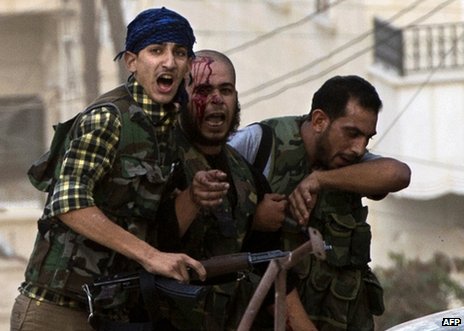
http://www.bbc.co.uk/news/world-middle-east-19769056

http://www.bbc.co.uk/news/world-middle-east-19769056

By Prof Michel Chossudovsky: August 31, 2013,
Theme: US NATO War Agenda

A leaked report:

In order to facilitate the action of liberation (sic) forces, …a special effort should be made to eliminate certain key individuals. …[to] be accomplished early in the course of the uprising and intervention, …

Once a political decision has been reached to proceed with internal disturbances in Syria, CIA is prepared, and SIS (MI6) will attempt to mount minor sabotage and coup de main (sic) incidents within Syria, working through contacts with individuals. …Incidents should not be concentrated in Damascus …

Further : a “necessary degree of fear .. frontier incidents and (staged) border clashes”, would “provide a pretext for intervention… the CIA and SIS [MI6] should use … capabilities in both psychological and action fields to augment tension.”(Joint US-UK leaked Intelligence Document, London and Washington, 1957)

Syria occupies a strategic location in the Middle East. The war on Syria is part of a roadmap of military undertakings. It is an integral part of a broader US-NATO-Israel military agenda directed not only against Iran, but also against Russia and China. Moreover, it is part of an extended military agenda which consists in establishing control over Middle East-Central Asian oil reserves as well as strategic oil and gas pipelines.

It is a component part of a broader process of war and of country level political destabilization in the Middle East, North Africa, sub-Saharan Africa and Central Asia.

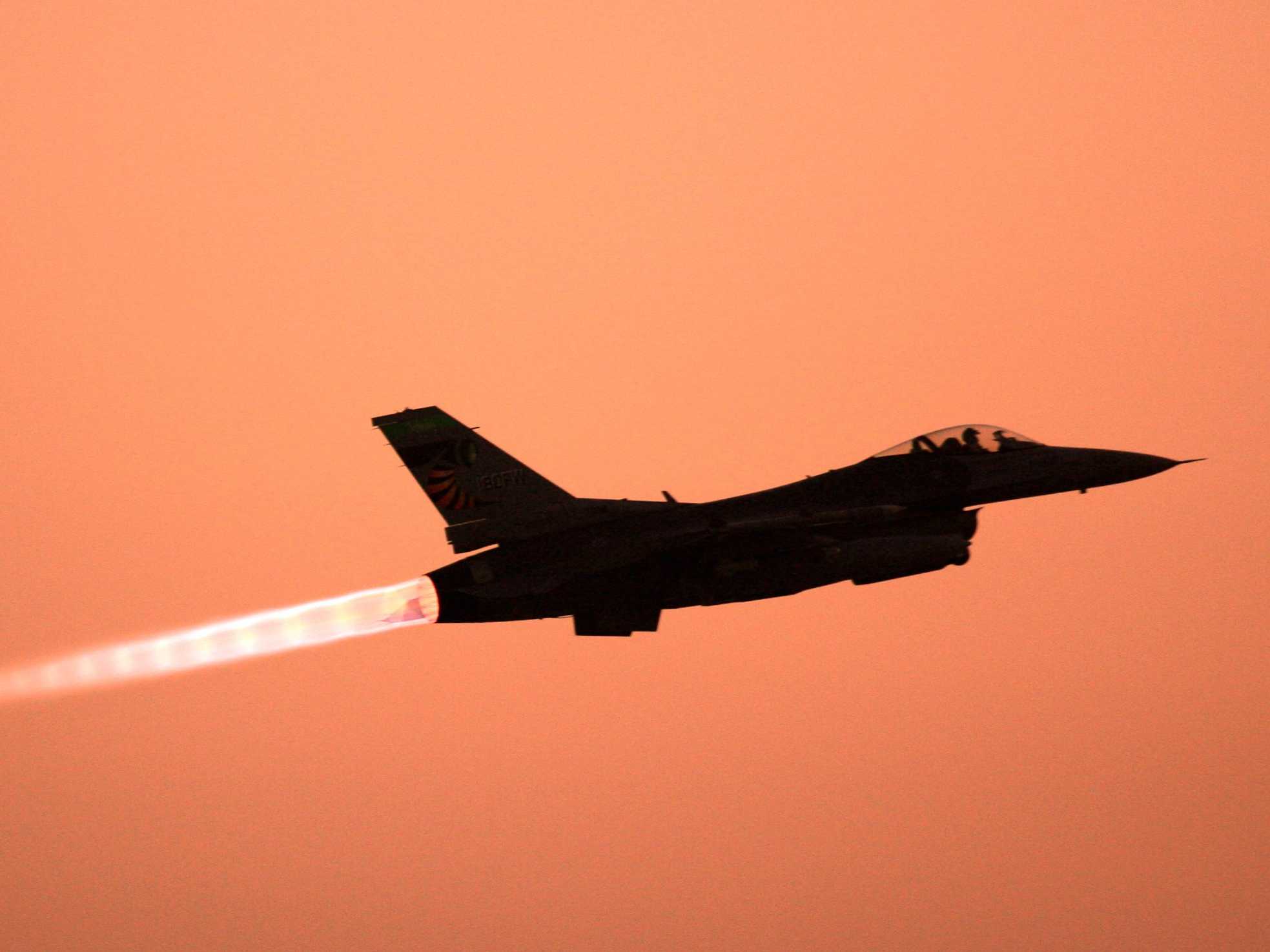
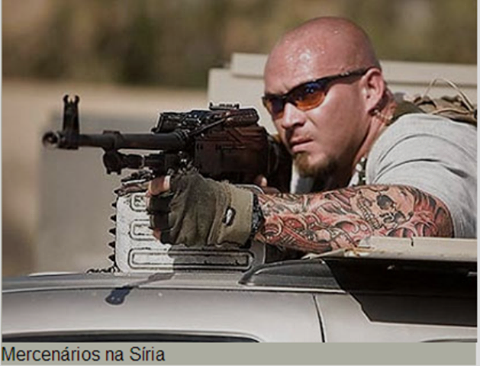
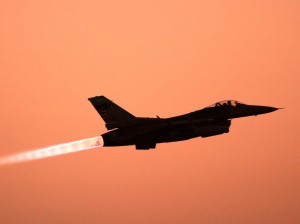
The failures of the US sponsored Al Qaeda insurgency in Syria (launched in March 2011) integrated by mercenary forces and supported by Turkey, Saudi Arabia, Qatar and Israel have set now the stage for a conventional theater war involving the deployment of air force as well as boots on the ground.
www.businessinsider.com

www.businessinsider.com

Pretext to Wage War: The Kosovo Model: Referring to the so-called “Racak massacre”, which was a staged event used as a pretext for NATO’s intervention in Yugoslavia, Washington has hinted that it may use the precedent of the Kosovo Model (1999) with a view to justifying an R2P military mandate in Syria. It is worth noting that in Yugoslavia, NATO intervened in support of the Kosovo Liberation Army (KLA), a terrorist and criminal entity with links to both Al Qaeda and organized crime.

Ironically, while President Obama has called for military intervention, US intelligence has cast doubt on the official story, pointing to the fact that intelligence is shady and that there is no “smoking gun”:

An intercept of Syrian military officials discussing the strike was among low-level staff, with no direct evidence tying the attack back to an Assad insider or even a senior Syrian commander, the officials said.

So while Secretary of State John Kerry said Monday that links between the attack and the Assad government are “undeniable,” U.S. intelligence officials are not so certain that the suspected chemical attack was carried out on Assad’s orders, or even completely sure it was carried out by government forces, the officials said. (AP, August 29, 2013):

The US Sponsored Insurgency: “Mass civilian casualty events” play a central role in US military doctrine. Civilian casualties are triggered with a view to drumming up public support for war on humanitarian grounds.

What we are dealing with is a diabolical staged event of civilian deaths with a view to blaming the Syrian government and triggering a regional war.
potentnews.com

potentnews.com

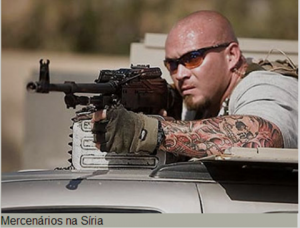
From the very outset of the insurgency in Daraa in mid-March 2011, terrorist brigades -largely integrated by mercenaries- have been set loose inside Syria.

A pattern of media disinformation was set in motion. The deaths of civilians have consistently been blamed on the Syrian government. The mass civilian casualties and atrocities committed by so-called “revolutionaries” have been used to demonize the Syrian government of Bashar al Assad.

MI6, CIA and Mossad operatives as well as Western Special Forces had integrated rebel forces from the very outset. The high profile terrorist attacks were coordinated by highly trained military contractors and intelligence operatives:

”As the unrest and killings escalate in the troubled Arab state, agents from MI6 and the CIA are already in Syria assessing the situation, a security official has revealed. Special forces are also talking to Syrian dissident soldiers. They want to know about weapons and communications kit rebel forces will need if the [British] Government decides to help. “MI6 and the CIA are in Syria to infiltrate and get at the truth,” said the well-placed source. “We have SAS and SBS not far away who want to know what is happening and are finding out what kit dissident soldiers need. (Daily Star, January 1st, 2012 http://www.dailystar.co.uk/news/latest-news/227911/Syria-will-be-bloodiest-yet emphasis added)

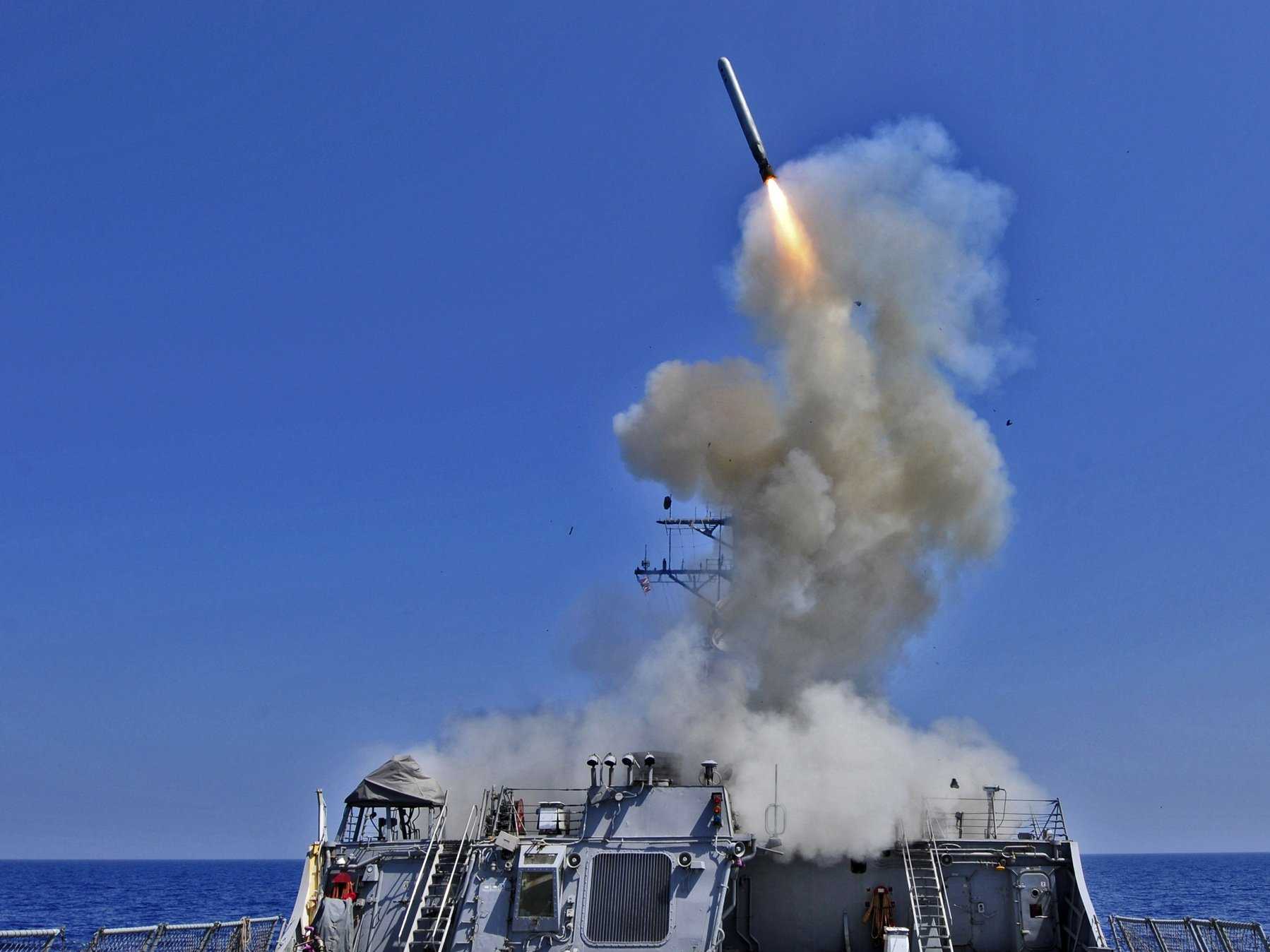
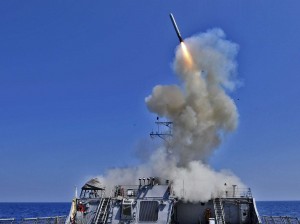
War preparations to attack Syria and Iran have been in “an advanced state of readiness” for several years. US, NATO and Israeli military planners have outlined the contours of a “humanitarian” military campaign, in which Turkey (the second largest military force inside NATO) would play a central role.

Britain’s Ministry of Defense: “This is all going like Libya but this will be bigger and bloodier” British Defense authorities admit that the planned air campaign on Syria would be on a much larger scale than in Libya in 2011 and that Israel would be an integral part of the military operation. “Syria supports Hezbollah. That threatens Israel and the whole of the Middle East…. “This is all going like Libya but this will be bigger and bloodier“” (Ibid, emphasis added)
there-are-a-few-major-problems-with-the-wests-reasoning-for-striking-syriaSyria has an advanced Russian S-300 air defense system. Russian technical advisers have been in Syria since November 2011 to “help the Syrians set up an array of S-300 missiles”. Reports also confirm that Syria has an advanced radar system installed in all key Syrian military and industrial installations. “The radar system also covers areas north and south of Syria, where it will be able to detect movement of troops or aircraft towards the Syrian border. The radar targets include much of Israel, as well as the Incirlik military base in Turkey, which is used by NATO.” (According to Arun Shavetz (November 24, 2011),

The Syria False Flag Chemical Weapons Attack: An Integral Part of US-NATO Military Planning: The WMD option for Syria -which has been on the drawing board of US intelligence since at least August 2012- is being carried out in the wake of the defeat of the US sponsored Al Nusrah terrorist brigades by government forces. Modeled on previous US-NATO led “humanitarian wars”, it consists in triggering civilian deaths in a staged false flag operation and then blaming Syria for killing its own people.  Preparations for a false flag chemical weapons attack started more than a year ago. According to an August 2012 Los Angeles Times report the Pentagon announced that it was sending “small teams of special operations troops” into Syria with a view to destroying Syria’s Weapons of Mass Destruction (WMD). These teams would in turn be supported by “precision air strikes”, namely air raids.

The scenario of a Syrian government chemical weapons attack on the Syrian population had already been examined by US intelligence:

An unclassified report by the director of national intelligence this year said Syria’s chemical agents “can be delivered by aerial bombs, ballistic missiles and artillery rockets.” But Syrian rockets, including Scud missiles procured from North Korea, are notoriously inaccurate, making them ineffective for delivering a heavy concentration of toxic chemicals to a specific target. . ( U.S. has plans in place to secure Syria chemical arms – latimes.com, August 22, 2012)

US Sponsored “Rebels” in Possession of Chemical Weapons

While there is absolutely no evidence of the Syrian government having used chemical weapons against its population, there is evidence that the CIA sponsored  Al Qaeda affiliated rebels have chemical weapons in their possession and that they are being trained by Western special forces in the use of chemical weapons by Western special forces.

This is not a rebel training exercise in non-proliferation. What is contemplated as part of this covert operation is the possession of chemical weapons by the US-NATO sponsored terrorists, namely “by our” Al Qaeda affiliated operatives,  including the Al Nusra Front. This US sponsored training of Al Qaeda terrorists in the art of chemical warfare is in blatant violation of  international law and Chapter VII of the UN Charter.

The United Nations Independent Mission confirms that Rebel Forces Are in Possession of Sarin Nerve Gas.

While Washington  points its finger at president Bashar al Assad, a United Nations independent commission of inquiry confirmed in May 2013 that the rebels rather than the government have chemical weapons in their possession and are using sarin nerve against the civilian population: U.N. human rights investigators have gathered testimony from casualties of Syria’s civil war and medical staff indicating that rebel forces have used the nerve agent sarin, one of the lead investigators said on Sunday.

The United Nations independent commission of inquiry on Syria has not yet seen evidence of government forces having used chemical weapons, which are banned under international law, said commission member Carla Del Ponte.

“Our investigators have been in neighboring countries interviewing victims, doctors and field hospitals and, according to their report of last week which I have seen, there are strong, concrete suspicions but not yet incontrovertible proof of the use of sarin gas, from the way the victims were treated,” Del Ponte said in an interview with Swiss-Italian television. “This was use on the part of the opposition, the rebels, not by the government authorities,” she added, speaking in Italian. (“U.N. has testimony that Syrian rebels used sarin gas: investigator,” Chicago Tribune, May, 5  2013, emphasis added)

Russia has provided the UN with evidence to this effect and Khan al-Assal was one of the sites on the list to be visited by the UN inspection team.” See Phil Greaves,  Syria: Obama’s Pretext for War? The “Rebels” are in Possession of Chemical Weapons, Global Research, August 29, 2013)

The Suppressed Daily Mail Report

In January 29, 2013, Britain’s most popular Daily Newspaper, in its online version Dailymail.co.uk published an article titled:  U.S. ‘backed plan to launch chemical weapon attack on Syria and blame it on Assad’s regime’

Archives.org has published the record of the controversial Daily Mail article pertaining to an alleged US sponsored intelligence operation to launch a chemical weapons attack on Syria and blame it on President Bashar al-Assad:

http://web.archive.org/web/20130130091742/http://www.dailymail.co.uk/news/article-2270219/U-S-planned-launch-chemical-weapon-attack-Syria-blame-Assad.html

Daily Mail report was removed following a libel suit launched by Britam Defense and Intelligence, a UK based Security Company against the Daily Mail.

Staged War Pretext Event

This diabolical operation consists in the US equipping its rebels with chemical weapons and implementing a carefully staged operation which consists in killing civilians and then blaming the Syrian government for the atrocities committed on behalf of the US-NATO military alliance.

What is unfolding is a diabolical scenario -which is an integral part of military planning- namely a situation where opposition terrorists advised by Western defense contractors are actually in possession of chemical weapons.

The evidence presented above suggests that the rebels rather the Syrian government are using chemical weapons against civilians. US special forces pertaining to chemical weapons have been operating inside Syria since August 2012. This period coincides with the training of the rebels in the use of chemical weapons (confirmed by CNN) as well as the use of chemical weapons including sarin gas by rebel forces.

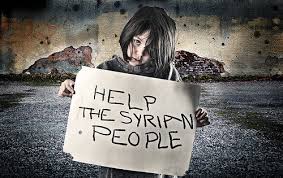
The West claims that it is coming to the rescue of the Syrian people, whose lives are allegedly threatened by Bashar Al Assad.  The truth of the matter is that the Western military alliance is not only supporting the terrorists, including the Al Nusra Front, it is also making chemical weapons available to its proxy “opposition” rebel forces.

Media Propaganda

The media has replicated the lie. Investigative reporting has been scrapped in favor of media spin, lies and fabrications. Syndicated reports call for military intervention under the auspices of the United Nations.The premise of the lie are set, the reports build their investigation around the lie.

Who is waging war on the Syrian people? The government or the US-NATO sponsored death squads, which are trained and recruited in Saudi Arabia, Qatar and Turkey.  In a bitter irony, the language and discourse of the “Progressives” while not calling for direct military action, is similar in scope and content to a Neo con Open Letter to President Barack Obama published in the Weekly Standard signed by Elliott Abrams, Paul Berman, Eliot A. Cohen, Robert Kagan, William Kristol, Bernard-Henri Levy, Karl Rove, among others.

“At a minimum, the United States, along with willing allies and partners, should use standoff weapons and airpower to target the Syrian dictatorship’s military units that were involved in the recent large-scale use of chemical weapons,…

N.B: On 3rd Sept 2013, at St. Petersburg, Putin emphasised in a television interview that it is unlikely that Assad will use chemical weapons against his own people knowing that it will draw international retaliation. He questioned, if it is proved  that rebels used chemical weapons will US bomb them?

Source: Edited: Ac.Krtashivanada   

Another Conspiracy and Deception by USA Supported by Western Media

syriaby Ac. Krtashivananda

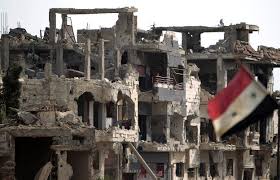
War is looming over Syria on the false pretext of use of chemical  weapons, with world leaders looking the other side.

Evidence of “weapons of mass destruction” is “no slam dunk,” U.S. officials are saying this time around, reversing the claim made about Iraq by then-CIA director George Tenet.

Opposition to a U.S.-led attack on Syria is growing rapidly in Europe and the United States, drawing its strength from public awareness that the case made for attacking Iraq had holes in it.

A majority in the United States, still very much aware of Iraq war deceptions, opposes arming the “rebel” force in Syria, so heavily dominated by foreign fighters and al Qaeda.  And a majority opposes U.S. military action in Syria.

But that public opinion is only just beginning to get expressed as activism.  With Republicans more willing to actively oppose a war this time, and some section of Democrats still opposed, there’s actually potential to build a larger antiwar movement than that of 2003-2006.

Thus far, however, what’s discouraging an attack on Syria is the public uproar that was created back then over the disastrous attack on Iraq.

housesThe nation of Iraq was destroyed.  Millions of refugees still can’t safely return.  As with every other humanitarian war thus far, humanity suffered, and the suffering will last for ages.  While the damage done to the United States itself doesn’t compare with the damage done to Iraq, it has been severe en ough to make many a near-sighted potential war supporter cautious.

The problem with attacking Iraq was not that the vast stockpiles of weapons were fictional.  Had every claim been true, the war would have remained illegal, immoral, and catastrophic.

Were it true that the Syrian government really chose the moment of the U.N. inspectors’ arrival to use chemical weapons, launching a U.S. war on Syria would still hurt the people of Syria — who are overwhelmingly opposed to it, regardless of their level of support for their government.

A regional or even global war could result.  The U.S. military is planning for such scenarios, as if preparing for the apocalypse while igniting it makes the action less insane.

A war of supposed humanitarian philanthropy should consider the value to humanity of the rule of law.  Launching a war in violation of the Kellogg-Briand Pact, the United Nations Charter, and the U.S. Constitution hurts the rule of law.

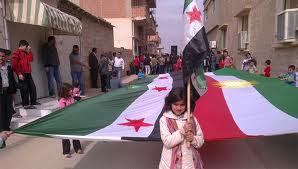
peoplesA war of beneficial generosity should consider other possible medicines that lack the deadly side-effects of war.  For example, the United States could easily stop supporting and arming abusive dictatorships in Saudi Arabia, Jordan, Bahrain, Yemen, and Egypt, not to mention the horrors inflicted on Palestine by Israel.

A so-called good and noble war against the evil of chemical weapons should probably be launched by a nation that doesn’t itself use chemical weapons.  Yet, the United States used white phosphorous and napalm as weapons in Iraq, not to mention such internationally sanctioned weapons as depleted uranium and cluster bombs — weapons the United States also sells to other governments regardless of their human rights records (including a big shipment of cluster bombs now headed to Saudi Arabia).

A humanitarian and just war should perhaps show equal concern for those humans killed with any kind of weapon.  Bombing Syria would inevitably kill significant numbers of people.  Isn’t that a problem even if they’re killed with the “right” kind of weapons?

Both sides in the war in Syria have killed large numbers of people.  It is not yet established if the rebels are using chemical weapons or the government.  Should indisputable facts establish that even if both sides have used those forbidden weapons, surely the proper response will not be to bomb both sides.

By joining in this war, on the side of an armed opposition dominated by people with no concern for democracy or human rights, the United States will make itself more hated in the region than its previous military actions already have.  While this war has nothing to do with defending the United States, it will in fact endanger it.

Here’s what should be done instead

Pressure Saudi Arabia and the Gulf states and Turkey to stop arming one side, while pressuring Russia and Iran to stop arming the other.  Insist on a cease-fire.  Support U.N. inspections of the evidence of crimes by both sides.  Provide humanitarian aid to Syria, Syrian refugees (now fleeing in greater numbers as the U.S. threatens to attack), and others suffering in the region.  Support nonviolent democracy movements.

And why stop there? End the occupation of Afghanistan, which we think of as “ending” but which is still twice as large as when President Obama was elected.  Stop arming brutal dictatorships and calling the weapons “aid.”  Close Guantanamo and other lawless prison sites.  Halt U.S. drone and other missile strikes worldwide.  Bring U.S. troops home from 175 nations.  Spend 10% of the U.S. military budget providing the world with clean drinking water, food, and assistance in sustainable agriculture and energy.


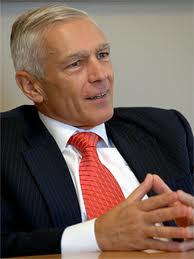
General Wesley ClarkThe bigger Conspiracy

We can consider the filmed testimony of former Nato chief, General Wesley Clark, when he recalled a conversation with a Pentagon general in 2001, a few weeks after the September 11 attacks:

‘He reached over on his desk. He picked up a piece of paper. And he said, “I just got this down from upstairs” — meaning the Secretary of Defence’s office — “today.” And he said, “This is a memo that describes how we’re going to take out seven countries in five years, starting with Iraq, and then Syria, Lebanon, Libya, Somalia, Sudan and, finishing off, Iran.”’

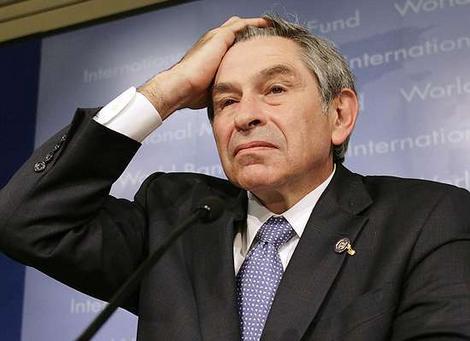
He recounted a conversation he had had in 1991 with Paul Wolfowitz, then US Undersecretary of Defence for Policy, who told Clark: ‘we’ve got about 5 or 10 years to clean up those old Soviet regimes – Syria, Iran, Iraq – before the next great superpower comes on to challenge us’.’

Paul_WolfowitzIn response, Clark said he asked himself: ‘the purpose of the military is to start wars and change governments? It’s not to deter conflicts?’

Another example of helpless surrender by world powers and UNO to naked and unethical aggression by a so called civilised and democratic country. America again proved to be the biggest terrorist  state of the world.

Source: War is a Crime – http://warisacrime.org/

Snowden, Surveillance and The Secret State

By David Cromwell and David Edwards

medialens

Edited by: Ac.Krtashivananda

Reports of Washington’s anger directed at surveillance whistleblower Edward Snowden indicate a basic truth about power. Noam Chomsky has expressed it as the underlying problem for genuine democracy, even in so-called ‘free’ societies:

‘Remember,  any state, has a primary enemy: its own population.’ (Noam Chomsky, Understanding Power, edited by Peter R. Mitchell and John Schoeffel, The New Press, 2002, p 70.

Anyone who steps out of line, especially if they defy authority’s attempts to apprehend them, risks severe punishment. All the more so because it is important to publicly discipline miscreants, lest the threat of a ‘bad’ example become a contagion sweeping through society.

Snowden was denounced by Dick Cheney, the warmongering former US vice-president, as a ‘traitor‘ and a possible spy for China. Senator Dianne Feinsten, chair of the US Senate intelligence committee, told reporters that Snowden had committed an ‘act of treason’. There was ‘undisguised fury’ amongst many US politicians at Snowden’s slipping away from Hong Kong and arriving at Moscow airport where he continued to evade detection. General Keith Alexander, director of the National Security Agency, complained that Snowden ‘is clearly an individual who’s betrayed the trust and confidence we had in him. This is an individual who is not acting, in my opinion, with noble intent.’

Given the source of such accusations – largely senior officials in the current and previous US administrations – rational observers will be unimpressed. As Norman Solomon correctly points out:

‘The state of surveillance and perpetual war are one and the same. The U.S. government’s rationale for pervasive snooping is the “war on terror,” the warfare state under whatever name.’Solomon issues a warning:

‘The central issue is our dire shortage of democracy. How can we have real consent of the governed when the government is entrenched with extreme secrecy, surveillance and contempt for privacy?’

Snowden’s revelations were brought to light by US journalist Glenn Greenwald in the Guardian. He correctly noted that a campaign of demonisation would attempt to deflect attention from the substance of Snowden’s revelations, and focus instead on Snowden’s personal background and any alleged character defects. Indeed, early reports relentlessly described Snowden as ‘a high school dropout’ or focused on his ‘heartbroken’ and ‘abandoned’ ‘dancer girlfriend’. On June 24, the first edition of the Independent referred to ‘fugitive Snowden’ in the headline to an article by Shaun Walker and David Usborne. The ‘impartial’ BBC also referred to Snowden as a ‘fugitive’, when ‘whistleblower’ would be more accurate, and certainly less loaded. Even the Guardian has referred on several occasions to Snowden as a ‘fugitive’.

An admirable Guardian editorial  defended Snowden, saying: ‘Those who leak official information will often be denounced, prosecuted or smeared. The more serious the leak, the fiercer the pursuit and the greater the punishment.’  More to the point, this applies to anyone who challenges power effectively. Ironically, the Guardian is describing exactly what it did to Noam Chomsky in 2005.

Inevitably, attempts are now being made to smear Greenwald, with both the New York Daily News and New York Times attempting to dredge up dirt on the journalist.  In a live television interview, Greenwald was even asked by NBC News host David Gregory:

‘To the extent that you have aided and abetted Snowden, even in his current movements, why shouldn’t you, Mr. Greenwald, be charged with a crime?’

Greenwald responded robustly:

‘I think it’s pretty extraordinary that anybody who would call themselves a journalist would publicly muse about whether or not other journalists should be charged with felonies. The assumption in your question, David, is completely without evidence, the idea that I’ve aided and abetted him in any way. […] If you want to embrace that theory, it means that every investigative journalist in the United States who works with their sources, who receives classified information, is a criminal. And it’s precisely those theories and precisely that climate that has become so menacing in the United States. It’s why The New Yorker’s Jane Mayer said, “Investigative reporting has come to a standstill,” her word, as a result of the theories that you just referenced.’

Greenwald reports that his home was burgled and, oddly, only a laptop was stolen.  As the journalist himself says: ‘I would be shocked if the U.S. government were not trying to access the information on my computer.’

The Primary Function Of The State

As important as the revelations of Edward Snowden are, the bigger picture is the overwhelming drive by state power to pursue its own strategic designs, to promote the corporate and financial interests with which it is in league, and to protect itself from any threat from the general population to make government truly work for the public.

The independent journalist Jonathan Cook makes the same point (via Facebook, June 26, 2013) that this is the real significance of the recent shocking revelations about surveillance:

‘I’ve been saying since the first Snowden revelations about the NSA that the goal of all this mass surveillance is not to foil terrorism; it’s to prevent all challenges to, or efforts to hold accountable, the corporate elites who are plundering our communities and the planet to enrich themselves.’

Cook quotes from a Guardian article which reveals that a UK police unit called the National Domestic Extremism Unit is monitoring 9,000 political activists: ‘In recent years the unit is known to have focused its resources on spying on environmental campaigners, particularly those engaged in direct action and civil disobedience to protest against climate change.’

Cook concludes: ‘The tapping of our phone calls and internet activity is being used for exactly the same nefarious purposes: to ensure we remain either docile or intimidated as our political and financial elites grow ever more ostentatious in their depravity and corruption.’

The shocking extent of the corruption of democracy by big business and its political allies remains mostly off the corporate media’s agenda. And corporate-employed reporters and commentators have mastered the art of not making painful connections; painful for powerful interests, that is. No wonder, too, that our major political parties offer no real choice: they all represent essentially the same interests crushing any moves towards meaningful public participation in the shaping of policy.

Making The Planet Uninhabitable

In the introduction of a new book, Managing Democracy, Managing Dissent, Rebecca Fisher outlines the stranglehold that corporate power, including its mass media sector and political accomplices, has on democracy. Fisher, an activist with Corporate Watch, writes:

‘our legal avenues to hold our putative representatives to account, or to persuade them to take heed of our demands, are restricted to actions via pressure groups or tame and largely ineffectual protests about specific, isolated issues. This ensures that the capitalist system is able to reap catastrophic damage upon subject populations and the environment, even to the extent of threatening the habitability of the planet, while remaining, for the most part, insulated from public challenge.’ (Rebecca Fisher, editor, Managing Democracy, Managing Dissent: Capitalism, Democracy and the Organisation of Consent, Corporate Watch, London, 2013, p. 2)

The framework of global capitalism – its reigning institutions, policies and practices – tends to be taken for granted in the corporate media. Media academic and activist Robert McChesney points to the ‘persistent reluctance’ of commentators to ‘make a no-holds-barred assessment’ of capitalism. He makes a revealing comparison to illustrate this absurdity:

‘A scholar studying the Soviet Union would never discount the monopoly of economic and political power held by the Communist Party and the state and then focus on other matters. The political economy would be central to any credible analysis, or the scholar would be dismissed as a charlatan. The same is true of any academic study of any ancient civilization.’ (Robert McChesney, Digital Disconnect: How Capitalism Is Turning The Internet Against Democracy, The New Press, New York, 2013, p. 17)

But on the rare occasion when the system is questioned, notes McChesney, even critical writers feel obliged to provide a ‘loyalty oath’ to capitalism:

‘whenever scholars examine their own society, it is generally taboo to challenge the prerogatives and privileges of those who stand atop it and benefit from the status quo, even in political democracies. This may be nearly as true of the United States as it was of the old Soviet Union.’ (Ibid., p. 17)

McChesney’s observations about ‘scholars’ extend to media professionals, as he makes clear in his book. As we have often said, one cannot expect a corporate media system to report honestly or accurately about the corporate world.

Fisher rightly warns that the corporate system ‘cannot co-exist with genuine democracy’, adding:

‘the emergence and predominance of the corporation has facilitated the emergence of a form of democracy – liberal democracy – which, by careful processes of management is made safe for corporations to dominate society, and for the capitalist system to reap enormous human and environmental damage.’

In other words, so-called ‘liberal democracy’ has become a lethal shield that protects capitalism from the threat of proper democracy based on meaningful participation by the general population. As we have explained in numerous books and media alerts, corporate power has for decades carried out huge campaigns of disinformation – called ‘public relations’ – and political lobbying to create the illusion of ‘consensus’ required to pursue its own selfish aims.

Fortunately, there is an inherent weakness here, because the system is maintained only so long as there is large-scale public acceptance of the status quo. Noam Chomsky puts it well when he says that:

‘even the most efficient propaganda system is unable to maintain the proper attitudes among the population for long. […] fundamental social and economic problems cannot be swept under the rug for ever.’ (Noam Chomsky, Deterring Democracy, Vintage, 1993, pp. 134-135)

Source: Media Lens

Source: Media Lens
http://www.medialens.org/index.php/alerts/alert-archive/alerts-2013/737-snowden-surveillance-and-the-secret-state.html

Egyptian Uprising

Ac. Krtashivananda

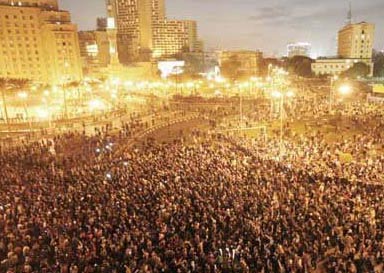
Egipt uprising: Tahrir Square

Egipt uprising: Tahrir Square

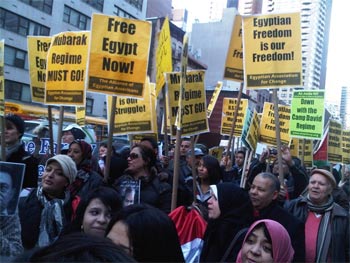
A few realities are emerging in recent Egyptian uprising.

President Morsi has been deposed  by the military. The population is divided into two camps. One is Muslim brotherhood who was instrumental in bringing down Mubarak regime in 2011. Muslim brotherhood represents the Islamic hard liners similar to the clerics of Iran. It is clear from the conflict that the military, supported by the economic tycoons and the administrative structure that is remnants of previous regime and also a section of media.

The cleric class is not strong in Egypt. Hence it can be said that the ruling class consists of Capitalist, military nexus is supported by the fundamentalist. Muslim brotherhood will be in a dilemma to decide if they will continue to support Morsi, who lost support of the ruling class or they should join hands with the revolting mass, who are religiously liberal and the women who is struggling since long against patriarchal society and fundamentalism.

Liberalism is unthinkable in any religious society, because in those society an individual is identified with the community. What they want is the political right to chose their representative who will in turn guarantee their minimum requirements recognising their religious identity.

egipt3Ultimately people will realise that not only political freedom, but  social and economic freedom, and also freedom from bondage of the Shariat law that curtails the freedom of women, is their inner spirit that remained suppressed since ages.

But unfortunately common mass has failed to observe that in Islamic society is founded on the idea of domination over wealth, political power and women by the patriarchal society. Fundamentalist wants to consolidate all such powers.

Will Egyptian revolt, inspire people to raise their head with sovereign dignity without fear against not only in political arena, but also against authoritative domination in all spheres of life.

NAXAL MOIST INSURGENCY IN INDIA

Ac.Krtashivananda

Fateful day of May 2013

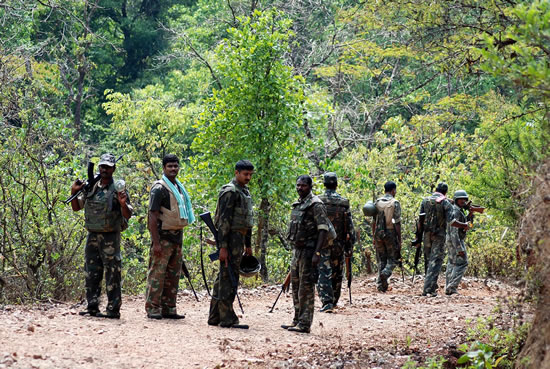
Naxalite Army

Naxalite Army

On May 25, 2013, members of the Congress party running the Parivartan Yatra (Change Campaign), projected as preparatory campaigning for the forthcoming state elections, travelling in a convoy of vehicles after addressing rallies in Sukma, were ambushed and killed by Naxalites. Executed were Mahendra Karma, founder and leader of the outlawed and disbanded Salwa Judum, Nand Kumar Patel, President of the Chhattisgarh Pradesh Congress Committee, his son Dinesh Patel, ex MLA Uday Mudaliyar, and others, while several others were injured, including prominent Congress state and ex-central minister Vidya Charan Shukla, ex-MLA Phulo Devi Netam. V.C. Shukla is presently undergoing treatment in Medanta Hospital in Gurgaon.

The whole incident was described in the media as a great intelligence failure. What was more surprising was the change in the route that was done at the last moment. This investigation is now in the hands of the National Investigation Agency.

On May 27, the Naxalites claimed responsibility for the attack by issuing a statement which called it a revenge for the atrocities done by the Salwa Judum. Nand Kumar Patel was suppressing people. It was in his tenure in the Center when paramilitary forces were deployed in the Bastar area. Mahendra Karma and his family have been exploiting tribals for long. They were into land grabbing and committed atrocities on tribals the statement further said. Karma was the prime target along with Nand Kumar Patel and VC Shukla but we regret killing of innocents and lower Congress functionaries.

In all 27 people were killed. Gruesome details have emerged about this meticulously planned operation. The Naxals were specifically hunting for Karma and kept asking for Karma to identify himself. This clearly suggested that the Naxals did not know much about how Karma looked and hence the belief is the Naxals were not local but from neighbouring Andhra Pradesh. Karma identified himself only to be taken afar and isolated from the convoy. Apparently, he was stabbed 78 times by 2 hardened women Naxals.

It was a show of anger against the master mind of gruesome human rights violation by the ruling class under the patronage of Mahender Karma himself a tribal leader.

Background

India's Red Army

India’s Red Army

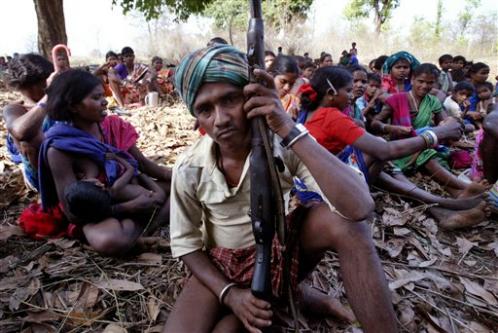
The NaxaliteMaoist insurgency is an ongoing conflict between Maoist groups, known as Naxalites or Naxals, and the Indian government. The conflict in its present form began after the 2004 formation of the CPI-Maoists, a rebel group composed of the PWG (People’s War Group), and the MCC (Maoist Communist Centre). In January 2005 talks between the Andhra Pradesh state government and the CPI-Maoists broke down and the rebels accused authorities of not addressing their demands for a written truce, release of prisoners and redistribution of land. The ongoing conflict has taken place over a vast territory (around half of India’s 28 states) with hundreds of people being killed annually in clashes between the CPI-Maoists and the government every year since 2005.In addition the CPA-Maoists have specifically targeted civilians during the conflict, a practice that has resulted in hundreds of deaths every year since 2006.

The armed wing of the Naxalite–Maoists is called the PLGA (Peoples Liberation Guerrilla Army) and is estimated to have between 6,500 and 9,500 cadres, mostly armed with small arms.

The Naxalites control territory throughout Bihar, Jharkand and Andhra Pradesh states and claim to be supported by the poorest of the rural population, especially the Adivasis.(tribals). The Naxalites have frequently targeted tribal, police and government workers in what they say is a fight for improved land rights and more jobs for neglected agricultural labourers and the poor. The Naxalites claim that they are following a strategy of rural rebellion similar to a protracted people’s war against the government.

COUTER INSURGENCY PLAN OF THE INDIAN GOVERNMENT

Salwa Judum (1) emerged in 2006, as a people’s resistance movement against the Naxalites, a far-left movement with Maoist ideology in some states in rural India that is designated by India as a terrorist organization on account of their violent activities. It was claimed by the govt. as an uprising of local indigenous people in Chhattisgarh, the movement later received bi-partisan support from both the ruling and opposition parties. A few years later the state government adopted the Salwa Judum movement in order to counter Naxalites in regions where they had established themselves by force.

In 2008, Chhattisgarh along with neighboring Jharkhand accounted for over 65% of the total Naxal violence in the country. Chhattisgarh state had trained a number of ‘Special Police Officers’ or SPOs (also commonly referred to as Koya commandos), from amongst the tribals who were part of Salwa Judum.

With success of counter-strikes on Naxalite hideouts in south Chhattisgarh, Maoist activities in the bordering districts of Orissa saw a rise in 2008, thus in Feb 2009, the Central government announced its plans for simultaneous, co-ordinated counter-operations in all Maoist extremism-hit states – Chhattisgarh, Orissa, Andhra Pradesh, Maharashtra, Jharkhand, Bihar, UP and West Bengal, to plug all possible escape routes of Naxalites.

History

The first movement against the Naxalites was the ‘Jan Jagran Abhiyan’, started in 1991 by Mahendra Karma, a local tribal Congress leader. This was mostly led by local traders and businessmen. This collapsed, and the leaders had to seek police protection. However, the second time around, the state had signed the mining agreements with the Tata and Essar groups, and was eager to flush the region of the Naxalites in order let the mining companies smoothly operate there. This was the beginning of police and military support to the movement. Mahendra Karma, a Congress Member of the Legislative Assembly (MLA) and the leader of opposition in the State Legislative Assembly became the public front and took the Bijapur-based movement to Dantewada, Katreli and other parts of the region.

Salwa Judum herded villagers and tribals in makeshift camps, where human rights abuses were rife. Salwa Judum became increasingly violent and out of control. Salwa Judum is also accused of burning and evacuating out 644 or more villages, making 300,000 people flee their homes. As the situation further escalated in the coming years, Human Rights Watch reported atrocities at both ends, and reported large scale displacement of the civilian population caught in the conflict between the Naxalites and Salwa Judum activists with at least 100,000 people moving to various camps in southern Chhattisgarh or fleeing to neighbouring Andhra Pradesh as of early 2008. By mid-2008 the figure grew to 150,000 tribals being displaced. There was also widespread report of rape and other abuses on women by the Judum.

The Chhattisgarh state Police employs tribal youths as SPOs (Special Police Officers), which are essentially 4,000 youth, both ex-Naxalites and those drawn from Salwa Judum camps in the Bastar region, who are paid an honorarium of Rs 1,500 (Rs 3000 in 2011)per month by the state government, were trained by with mostly .303 rifles. In Feb 2009, the Supreme Court in India declared such arming of civilians illegal.

Human rights violation

Some human rights organizations such as the People’s Union for Civil Liberties has raised allegations against Salwa Judum. A fact finding commission of National Human Rights Commission of India (NHRC), appointed by Supreme Court of India reported that Salwa Judum was a “spontaneous reaction by the tribals to defend themselves against the “reign of terror unleashed by the Naxalites.” The report was submitted to honourable Supreme Court of Indiawhich, on the contrary, declared Salwa Judum to be illegal and unconstitutional, and ordered its disbanding. This clearly raises doubts against the neutrality of the NHRC commission whose report stood in strong support of Salwa Judum.

State sponsoring of militia

In April 2008, a Supreme Court bench directed the state Government to refrain from allegedly supporting and encouraging the Salwa Judum: “It is a question of law and order. You cannot give arms to somebody (a civilian) and allow him to kill. You will be an abettor of the offence under Section 302 of the Indian Penal Code.”; the state government had earlier denied, Salwa Judum being a state-sponsored movement, later it directed the state government to take up the remedial measures suggested in the NHRC earlier report . The Human Rights Commission alleged that Security forces collaborated with Salwa Judum in their fight against the Maoists.

In December 2008, replying to a petition filed in the Supreme Court, the state government acknowledged that Salwa Judum and security forces had burnt houses and looted property but the allegations against Salwa Judum of killings though the National Human Rights Commission reported on the contrary.. In an order, the Supreme Court mentioned that people take arms for survival and against inhuman implementation of law depriving the weak, and not senselessly. The court pointed out the importance of formalized state police actions, in ways that do not ignore Constitutional values:

“Given humanity’s collective experience with unchecked power, which becomes its own principle and its practice its own raison d’etre, resulting in the eventual de- humanisation of all the people, the scouring of the earth by the unquenchable thirst for natural resources by imperialist powers, and the horrors of two World Wars, modern Constitutionalism posits that no wielder of power should be allowed to claim the right to perpetrate the state’s violence against any one, much less its own citizens, unchecked by law, and notions of innate human dignity of every individual.”

1. Salwa Judum (meaning “Peace March” or “Purification Hunt” in Gondi language) was a civilian militia mobilised and deployed as part of anti-insurgency operations in ChhattisgarhIndia, aimed at countering Naxalite violence in the region. The militia consisting of local tribal youth received support and training from the Chhattisgarh state government.[1][2] (http://en.wikipedia.org/wiki/Salwa_Judum)

EMERGENCY

Logo Emergency

Logo Emergency

History

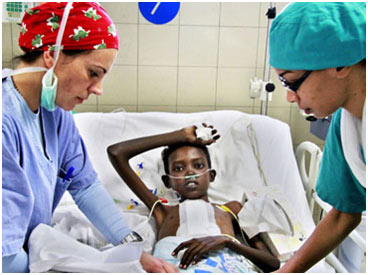
Over 5.2 million people have received free, high quality health care by EMERGENCY.
One in three was a child.

EMERGENCY is an Italian NGO founded in 1994 in order to provide assistance to the civilian victims of war.

From 1994 to the present day, EMERGENCY has worked in 16 countries, building hospitals, Surgical Centres, Rehabilitation Centres, Paediatric Clinics, First Aid Posts,  Primary Health Clinics, a Maternity Centre and a Centre for Cardiac Surgery. Subsequent to request from local authorities and other organizations, EMERGENCY has also helped to renovate and equip pre-existing health facilities.
Since 1994, EMERGENCY teams have provided assistance to 5,216,324 people (as of December 31, 2012).

emergency-work   Every day EMERGENCY deals with the wreckage caused by war and for this very reason EMERGENCY has always been committed to promoting a culture of peace.
In 1994 EMERGENCY entered the campaign against antipersonnel landmines which brought Italy to ban them.
In 2001, shortly before the war against Afghanistan, EMERGENCY appealed to the Italian people asking them to demonstrate against the impending war with “a white rag for peace” (“uno straccio di pace”).
In September 2002, together with other organizations, EMERGENCY launched a huge campaign to prevent Italy from taking part in the war against Iraq.
At the same time, EMERGENCY promoted a nationwide petition campaign called “Stop the war, sign for peace” to ask for the enforcement of Article 11 of the Italian Constitution, which repudiates any act of war. The petition was submitted to Parliament in June 2003.

In 2008, with some African countries, EMERGENCY has elaborated the Manifesto for a Human Rights Based Medicine asking for a medicine based on Equality, Quality and Social responsibility.
EMERGENCY is a recognized charitable organization (1998) and Non-Governmental Organization (1999).

In 2006 EMERGENCY became an NGO partner of the United Nations Department of Public Information.
In 2010, EMERGENCY promoted the manifesto “The Manifest We Want” asking for a fairer world.

In order to support EMERGENCY’s goals on a broader international scale, in 2008 the volunteers of the numerous chapters operating throughout the US since 2005 founded EMERGENCY USA.
For the same purposes, EMERGENCY UK was founded in November 2007 (visit EMERGENCY UK website). EMERGENCY Japan started its activities in early 2011 (visit EMERGENCY Japan website), as well as EMERGENCY Switzerland, which later became EMERGENCY Switzerland Foundation.

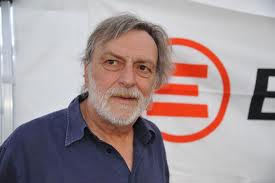
Gino Strada-Founder of Emergency

Gino Strada-Founder of Emergency

The world we want

We believe in the equality of all human beings, regardless of their opinions, sex, race; of their ethnic, political, religious background and belonging; of their social status and financial condition.

We repudiate the use of violence, terrorism and war as instruments to resolve the disputes between individuals, peoples, nations. We want a world based on social justice, on solidarity, on reciprocal respect, on dialogue, on an equal distribution of resources.

We want a world in which governments guarantee the basic equality of all members of society and the right to medical treatment that is both of a high standard and free; the right to a public education system that develops each person, each human being, enriching their knowledge and intellect; the right to free information media.

In our own Country, instead, for many years now we’ve witnessed the progressive and systematic destruction of any and all principles of social, human cohabitation. A most severe and savage drift is before our eyes.

In the name of “international alliances”, the Italian political class has chosen war and aggression against other Countries.

In the name of “freedom”, the Italian political class has chosen war against its own citizens, building a system of privileges based upon exclusion and discrimination, a system of arrogant prevarication, of ordinary, daily corruption.

In the name of “security”, the Italian political class has chosen war against those who come to Italy to survive, instigating hatred and racism against them.

Is this a democracy? Simply because it involves electoral processes of representativeness? Is the act of voting enough for a Country to be defined as “democratic”?

To us, a political system is democratic only if it works for the common well-being, favouring in its actions the needs of the underprivileged, the needs of the weakest social groups, to better their living conditions, so that we may all be a society of citizens.

This is the world we want. For ourselves, for all of us. A world of equality

Sos Village: a Pioneer project for Childrens spread in 130 Countries

Ac. Krtashivananda

SOS Children’s Villages is active in 133 countries and territories. The variety of this international work is brought together by the umbrella organisation SOS Children’s Villages International, which unites all of the autonomous national associations.

Organisational structure

In all countries where SOS Children’s Villages operates, the aim is to form a national association which is its own legal entity, with its own statutes and Board of Directors. Common for all of them is membership of the international umbrella association and the fact that their Board of Directors work on an honorary basis. Each member association is obliged to comply with the international statute of the organisation. Practices in relation to education, child-care, finance and administration are also common to all member associations.

Each national association is registered and organised as a foundation, trust, association, non-profit company or society. As a full member of SOS Children’s Villages International, they have the right to apply for funding through the umbrella association and request services from the General Secretariat.

Who we are – Our mission statement 

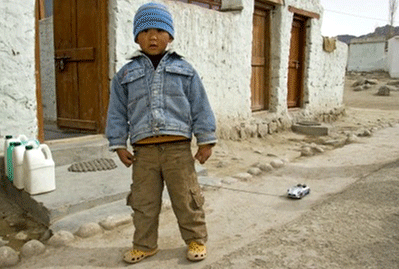
Sos-ChildrenVillage-Ladakh

Sos-ChildrenVillage-Ladakh

We take action for children as an
independent non-governmental social
development organisation.
We respect varying religions and
cultures, and we work in countries and
communities where our mission can
contribute to development. 
We work  in the spirit of the United
Nations Convention on the Rights of
the Child and we promote these rights
around the world.

SOS Children’s Village Leh-Ladakh (India)- © B. Neeleman

OUR VISION
Every child belongs to a family and grows with love, respect and security. ..
OUR MISSION
We build families for children in need. We help them shape their own futures and we share in the development of their communities.
OUR VALUES
Courage, responsibility, trust and reliability – these are our guiding values. 


News & Stories

Fact orientated information relating to issues that impact on the welfare of children across the world is found by the following NEWS.
Samples demonstrating how SOS Children’s Villages help strengthen families and address the specific needs of at-risk children are found by following STORIES.

Goals for Children

child15/4/2013 – Extreme poverty has been reduced by half. The annual death rate of children under-five and has reduced by 4.4 million. SOS Children’s Villages has played its part in reaching Millennium Development Goals. However, it warns that the clock is ticking to meet a goal for children, who remain at risk. More…

No end in sight to conflict in Syria

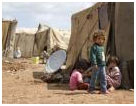
child215/03/2013 – Two years after the conflict in Syria first began there are still no signs of peace. The UNHCR reports over a million people who have fled to neighbouring countries and countries in Northern Africa so far, half of them children. In Syria itself there are more than two million displaced persons. More…

Child care in Nepal on the agenda

chid3

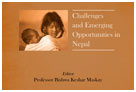
18/03/2013 – In June 2012 the Nepal Government, UNICEF, Save the Children and SOS Children’s Villages Nepal organised a Policy Dialogue on alternative care of children. The event was a milestone in the history of the childcare movement in Nepal. The book ‘Alternative care of children. Challenges and emerging opportunities in Nepal’ was now published.


Moving Forward:

Implementing the Guidelines for the Alternative Care of Children 

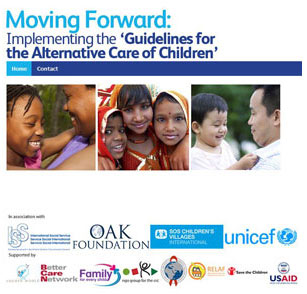
07/03/2013 – SOS Children’s Villages is pleased to announce the launch of the handbook for the implementation of the UN Guidelines, Moving Forward: Implementing the ‘Guidelines for the Alternative Care of Children’ on 7 March at the Human Rights Council in Geneva.
Moving-Forward

Moving-Forward

Over two million children around the world live in care institutions. At least 80% of these have one or both parents alive. Many more children are in need of alternative care and are in danger of becoming unnecessarily separated from their families. These children are subject to higher risks of exploitation, abuse and other violations.

The Guidelines for the Alternative Care of Children, unanimously welcomed by the UN in 2009, have become an important tool for decision makers and service providers in the child care sector to address the special vulnerabilities of children deprived of their family. They mark a fundamental policy shift indicating to States that, as a first priority, they should invest in strengthening the capacity of families as well as in mechanisms to prevent separation.
Since the approval of the Guidelines, however, the continuing challenge has been their implementation. As remarked by Jean Zermatten, Chairperson of the CRC Committee*, “as with all internationally agreed standards and principles, however, the real test lies in determining how they can be made a reality throughout the world for those that they target – in this case, children who are without, or are at risk of losing, parental care”.

Implementing the Guidelines

SOS Children’s Villages is pleased to announce the launch of the handbook for the implementation of the UN Guidelines, Moving Forward: Implementing the ‘Guidelines for the Alternative Care of Children’ on 7 March at the Human Rights Council in Geneva.
The Centre for Excellence for Looked After Children in Scotland (CELCIS), together with a team of child protection experts, governments, UN Agencies, and NGOs – including SOS Children’s Villages – have been working for over a year to produce an implementation handbook. The publication Moving Forward: Implementing the ‘Guidelines for the Alternative Care of Children’ provides practical guidance on using the Guidelines to inspire reform of social welfare and alternative care systems. It highlights implications for policy-making, and provides links to what is already being effectively done on the ground. Above all, the handbook provides insight and encouragement to all professionals on what can feasibly be done in resource constrained contexts.

Matilde Luna, Project Leader from RELAF (Latin America) confirms that “the handbook provides child protection specialists and decision makers with inspiration for the design of national policies to better implement the Guidelines in Latin America. It builds on the trail-blazing progress that the region has continued to make with respect to alternative care in our region”.

SOS Children’s Villages calls upon governments and civil society to uphold the principles of the Guidelines, using the handbook to better support families to prevent unnecessary separation and protect children in need of alternative care.

The publication will be available in English, French and Spanish and in Russian atwww.alternativecareguidelines.org

*Committee on the Rights of the Child

Film accusing Sri Lanka of war crimes screened at UN

Ac. Krtashivananda
Geneva, March 02, 2013

Refuges in No Fire Zone Camp.

Refuges in No Fire Zone Camp.

The Sri Lankan military committed numerous war crimes during the final months of the country’s 26-year civil war, according to a documentary aired for the first time, amid vigorous protests from Colombo.

Using graphic video and pictures taken both by retreating Tamil Tiger rebels, civilians and victorious Sri Lankan troops, “No Fire Zone – The Killing Fields of Sri Lanka” presents a chilling picture of the  final 138 days of the conflict that ended in May 2009. (Trailer)

Filmmaker Callum Macrae insisted before the screening on Friday that the film at the UN headquarters in Geneva  it should be seen as “evidence” of the “war crimes and crimes against humanity” committed by government troops.

“The real truth is coming out,” he said.

Sri Lanka’s ambassador in Geneva, Ravinatha Aryasinha, strongly protested the screening of the film on the sidelines of the ongoing UN Human Rights Council.

HRW

HRW

Amnesty International

Amnesty International

Human Rights Watch and Amnesty International, which hosted the screening, are calling for the council to order an international probe.

They charge that Sri Lanka’s domestic Lessons Learnt and Reconciliation Commission (LLRC) has glossed over the military’s role.

The film for instance alleges that a “no fire zone” set up by the government in January, 2009, basically functioned as a trap for the hundreds of thousands of civilians who flooded into it in the hope of finding safety.The area was heavily shelled, and in the film maimed and bloodied bodies, of men, women and children, lay strewn.

The UN has estimated that some 40,000 people were killed in the final months of the war, most of them due to indiscriminate shelling by the Sri Lankan military.

Peter Mackay, a UN worker who was trapped inside the zone for two weeks, questioned in the film why the government would set up the “no fire zone” within range of all of their artillery.

“Either you don’t care if you kill the people in that safe zone or you are actively targeting them,” he said, adding that he believed the latter was true.

He and others describe how aid-centres and makeshift hospitals were shelled soon after UN or Red Cross workers informed the government of their coordinates, which is ironically standard practice to ensure that such places are spared in bombing campaigns.

Balachandran Prabakaran the son of the LTTE leader (The Independent)

Balachandran Prabakaran the son of the LTTE leader
(The Independent)

The footage provided by the retreating Tamil Tigers and civilians is devastating, showing parents wailing over their dying and dead children, but the images provided by the government forces are perhaps even more shocking.

Video of a Tamil commander first being interrogated, and then a picture of his mutilated body in the dirt; naked and bound prisoners coldly executed; dead, naked women, who have clearly been sexually abused filmed amid degrading comments by on looking soldiers.

And then there is footage of the 12-year-old son of Tamil Tiger leader Velupillai  Prabhakaran, Balachandran, whose body is seen with five bullet holes in his chest.

He was not caught in cross-fire: a separate video shot two hours earlier, shows him sitting in military custody in a bunker eating a biscuit.

Additional Report

Rape is being used as an instrument of torture by Sri Lankan security forces to extract confessions from suspected Tamil separatist supporters, the rights advocacy group Human Rights Watch has alleged.

As a United Nations Human Rights Council meeting that will examine Sri Lanka’s civil rights record begins in Geneva, a report released by Human Rights Watch, We will teach you a lesson, details 75 statements from Tamil victims who say they were raped and tortured by  soldiers police and other pro-government para-military.

Thirty-one of the victims allege they were raped after the cessation of Sri Lanka’s long-running civil war in May 2009.

The last case detailed in the report was in October 2012, but HRW says the practice is continuing and that the 75 cases outlined represent a tiny fraction of the total sexual assaults.

“The Sri Lankan security forces have committed untold numbers of rapes of Tamil men and women in custody,” Brad Adams, Asia director for Human Rights Watch, said. “These are not just wartime atrocities but continue to the present, putting every Tamil man and woman arrested for suspected LTTE involvement at serious risk.”

The Sri Lankan government dismissed the allegations as fake and as Tamil separatist propaganda. Sri Lanka’s military spokesman, Ruwan Wanigasooriya, rejected all of the allegations, saying they lacked credibility. He said the report consisted of ‘‘fabricated allegations’’ and ‘‘good creative writing’’.

The 75 case studies presented by HRW bear strong similarities. All allegations, the rights body says, have been corroborated by medical and legal reports.

Typically, a Tamil man or woman is picked up off the street, or from their home, by a group of men driving an unmarked van.

They are interrogated, tortured – many are beaten with sand-filled pipes or burned with cigarettes – and then raped, usually by several people over several days, until they sign a confession, admitting to activity with separatist terrorist group the Liberation Tigers of Tamil Eelam, the Tamil Tigers. Some people are hung by their arms, others have plastic bags containing petrol forced over their heads.

One man, 21-year-old ‘DK’, alleges he was snatched from the street by two men in a white van in August 2012. He was held in a room and interrogated.

“At night when I was in a small room, a man in civilian clothes came and started touching me indecently. He told me to have oral sex with him. When I refused, he beat me and raped me. This happened every night for four or five nights. I signed the confession when I could not bear this torture any more.”

Opening the Human Rights Council session in Geneva on Monday, the UN’s Human Rights Commissioner Navi Pillay grouped Sri Lanka with countries such as Rwanda, the Palestinian territories, Iraq and Afghanistan as countries where human rights abuses had gone unpunished.

“There are still far too many people with command responsibility who escape justice for serious crimes and gross human rights violations . . . massive violations have occurred in . . . Sri Lanka.

BLACK  DAY OF HUMAN RIGHTS

On 21st March 2013, after months of backroom haggling, the US resolution, that  has been adopted  backed by 25 countries, with 13 opposed and 8 abstentions, is a shameless document that rejected the demand of UNHCR. It “welcomed” the government’s promise to hold provincial elections in the island’s Tamil majority north, and the “progress” in infrastructure rebuilding, de-mining and resettlement. At the same time, it calls on the Rajapakse government “to conduct its own independent and credible investigation into allegations of violations of international human rights law and international humanitarian law.” This is nothing but asking the government to probe its own war crimes. The New York Times described the resolution as “polite diplomatic shorthand for growing evidence that soldiers killed tens of thousands of civilians.”

The LLRC (Lessons Learnt and Reconciliation Commission) was established by Rajapakse during 2010 in a bid to deflect criticism, including from the US, and cover up war crimes. It made limited proposals to disarm paramilitary forces, probe disappearances and extrajudicial killings and forge power-sharing arrangements with the Tamil capitalist elite. Yet, Rajapakse’s government shelved even those proposals.

The US and other global powers backed the war against the LTTE and only voiced human rights criticisms in the final months of the military onslaught. China had emerged as the principal supplier of weapons and financial aid to Rajapakse’s government.

India voted for the resolution, seeking to advance its economic and strategic interests in what it regards as its sphere of influence. The Indian government engaged in behind-the-scene machinations to water down the resolution. For instance, the US draft had called for “unfettered access” for UNHRC officials to visit Sri Lanka. Sri Lankan cabinet minister Keheliya Rambukwella said Colombo was “grateful to India” for removing this and other clauses.

New Delhi wanted these changes to appease the Colombo government, fearing that greater pressure would push Rajapakse further into China’s orbit. New Delhi also calculated that backing demands for UNHRC intervention in Sri Lanka could set a precedent for use against India’s own human right violations.

Political parties in India’s southern Tamil Nadu province had launched a vociferous communal campaign against Colombo, with the Dravida Munnethra Kazagam (DMK) demanding a tough stand on Sri Lanka. The New Delhi government then declared it would move strong amendments to the US draft resolution. Ultimately, however, it moved no amendments and deceived the Tamils.  On protest against New Delhi, DMK resigned from the ruling coalition.

Note: Indian Govt. Except issuing some diplomatic jargon,  politically compromised and remained a silent spectator in this massacre of Tamilians 

A Reflection

Ac. Krtashivanda

Pope Benedict XVI

Pope Benedict XVI

During his university lecture in Regensburg after being elected, the Pope quoted the words of  Byzantine emperor Manuel II Paleologus:  “Show me just what Mohammed brought that was new, and there you will find things only evil and inhuman, such as his command to spread by the sword the faith he preached”. That had created a furore in the Islamic world.

The Pope further said that violence is incompatible with the nature of God and the nature of soul. “God,” he said, “is not pleased by blood—and not acting reasonably is contrary to God’s nature. Faith is born of the soul not of the body”. “To convince a reasonable soul”, he continued, “one does not need a strong arm, or weapons of any kind, or any other means of threatening a person with death”.

The controversial words of the Pope’s lecture were not delivered without careful pre-thought; they were a deliberate attempt to challenge Islamic countries to reject their intolerant stance towards non-Muslims, and to spark an open dialogue on reciprocity. The Papal biographer George Weigel said, “He knew what he was doing.” “He is saying that irrational violence is displeasing to God”.

The question the Pope is putting on the table is: Does the significant part of Islam have the capacity to be self-critical?

Pope Benedict XVI - Revensburg lecture

Pope Benedict XVI – Revensburg lecture

Islam has the same historical background as Judaism and Christianity. Like Jews and Christians, Muslims also believe in the myth that theirs is the only true religion. Those who do not believe in the Koran, are declared as non-believers, or kafirs. Like Christians, Muslims developed a passion for world domination and converted non-believers even through intimidation. The influence of the Renaissance in Europe altered the violent character of the Catholic religion, but the mindset of the orthodox Islamic world today has remained virtually unchanged.  It is still confined to establishing an Islamic Nation (except a few countries) and to obeying the Shariat, a legal code that severely curtails the freedom of women and non-believers and negates the scientific mode of thinking. Of course, the progressive people of Islamic societies in many countries are revolting against such dogmatic impositions. But even progressive Muslims and intellectuals are not loud enough on the need of reciprocity.

The Pope’s concern was Islam’s potential for extremism based on a literal interpretation of the Koran. He said, “One has to have a clear understanding that it is not simply a denomination that can be included in the free realm of pluralistic society”.

In 1995, Muslims were allowed to build a mosque in Rome – the biggest in Italy – but Catholics have not been permitted to build a church in Saudi Arabia. Muslims  demand all the benefits of a free society in Europe but they don’t accord the same rights to people of other faiths in their own countries. Non-Muslims are not permitted to even enter Mecca. In Iran, Zoroastrians are deprived of their religious rights. It is strange that this double standard does not bite the conscience of Muslim intellectuals and progressives. Will Muslims ever consider allowing, even reluctantly, the building of any church or temple in Mecca?

The violent and  fundamentalist reaction of the Muslim world to the Pope’s lecture proved beyond doubt that the Pope raised a vital question on reciprocity, and exposed the culture of intolerance promoted by the Islamic community.

The human mind wants freedom and hence cannot remain forever imprisoned within the narrow fence of dogmatic scriptural injunctions. The Islamic world is afraid to face the truth that the evolution of higher knowledge and human consciousness is a natural process. Islam must also evolve according to changes in time, place and person. Any system, culture, or religion based on relative values failing to adjust to such changes inevitably becomes obsolete.

The Pope was also critical of the concept of pure scientific reason which is merely materialistic: “A reason which is deaf to the divine and which relegates religion into the realm of subcultures is incapable of entering into the dialogue of cultures.” He added, “[…] modern scientific reason with its intrinsically Platonic element bears within itself a question which points beyond itself and beyond the possibilities of its methodology.”

In conclusion,  he urged: “It is this great Logos, to this breadth of reason, that we invite our partners (both religious and secular) in the dialogue of cultures. To rediscover it constantly is our great task”.

Adam and Eve by Michelangelo

Adam and Eve by Michelangelo

Incidentally, it escaped his argument that the yardstick of reason may also cause the concept of heaven and hell to crumble.  The myth of Heaven too, which will never allow Adam and Eve to achieve freedom is another contradiction to the fundamental essence of the human spirit.

It is baffling that in this century the tendency to relapse into medieval obscurantism is gaining momentum. With the collapse of the Soviet Empire the movement for self-reliance has adopted sentiments and slogans of religious fundamentalism – presented to the innocent man and woman as an antithesis to the pseudo-culture, economic domination and values of the Western world.  In search of security people have slipped into the backwaters of dogmatic faith.

This represents a new flare-up – probably the last gasp – in the age-old life-and-death struggle between religion and science, between faith and reason, and between mystic agnosticism and empirical knowledge – a struggle which has always placed civilized humanity in a dilemma.

The scientific mode of thought, having driven religion from pillar to post over a period of several centuries, is meeting the final assault from of a hitherto vanquished adversary. Denying the possibility of ever knowing reality through direct experience, religions preach a neo-mysticism and a teleological  view of life which is the expression of humanity’s loss of faith in itself.

This is in contradiction to spiritual enlightenment, which leads the human mind to experience the real essence of freedom and the organic wholeness of creation beyond the boundaries of race, religion, nation, caste, tribe and gender. Only with the evolution of this New Humanistic consciousness the narrow psychic boundaries can be transcended, heralding ultimately to a harmonious world community.

Counter Evolution

by Ac. Krtashivananda

The world at present is at the phase of counter evolution. Counter evolutionary phase is a painful phase in human history:

1956 soviet invasion of Hungary

1956 soviet invasion of Hungary

Example of counter revolution is Soviet invasion of Hungary in 1956, of Checkoslovakia in 1968 and military uprising of the fundamentalist against Bangladesh Govt. In  1975. Uprising of military junta led by C.I.A against peoples govt. in Central and South America.

Example of evolution is Renaissance  of Europe for three centuries starting around 17th century and its effect spread around the world in due course of time. Freedom and security was the article of faith during Renaissance in Europe.  Another one is Bengal Renaissance during 19th and 20th century against social dogma, that spread all over India subsequently.

     Counter evolution is to maintain status quo, opposing against progressive idea that leads to freedom in both socio-economic arena, in social sphere and prefer to hold on to dogmatic belief shunning rational judgement.

     The psychological base of counter evolution is to hold on to stereo typed ideas out of insecurity or ignorance and ‘fear from freedom’ as Eric Fromm claimed. There are two types of people that are closed to progressive idea. First one are those who are adverse to change because of  their ardent belief on dogmatic tradition out of fear; and the other type realise the fallacy of dogmatic ideas, but are too reluctant to counter it, simply because they feel uneasy and in secured to discard the stereo typed traditions and rituals and prefer to maintain the status quo.

The examples are religions, sects, socio economic beliefs etc. Adherence to those  cause psychic stagnancy and becomes the foundation of counter evolution. It invites disaster if any one raises dissenting voice loudly in the stronghold of the leaders of dogmatic faith. Speaking against ruling class for politico economic exploitation, against  holy scriptures, mortal God or their idols and idol worship and  meaningless rituals, are considered a sacrilege. Such people are excommunicated, banished, put behind bar or they await the gate of inferno.

Ram Mohan Roy

Ram Mohan Roy

Ram Mohan Roy was the father of Bengal Renaissance. In 1930’s he initiated Brahma Samaj movement against  burning of widows, child marriage and polygamy by men.  He was excommunicated by Hindu community including his entire family. Only his wife accompanied him declaring, “ I don’t know philosophy, but I trust my husband that he will upheld dharma”. History remembers Ram Mohan and forgot his adversaries.

The tragedy of the society is that Jesus will be crucified; Al Hallaz have to die in cross, Mahaprabhu will be killed secretly; Ram Mohan will get excommunicated, Taslima Nasrin of Bagladesh will be banished from her own country, non believers will be out casted and shunned by the near one’s; in Asian  country honour killing will be endorsed as a custom, for marrying in different faith. Jihadis and fundamentalists will be glorified to demonish and kill non-believers; Hundreds of poorest people will be persecuted or face the bullet for opposing the tyranny of the ruling class; Dr. Binayak Sen(central India)and alike, will be put behind the bar for his sympathy for the poorest class ;and many such untold episodes are hidden in the dark chamber of history. Sane people helplesly watch how man’s lack of faith in himself, lead the society towards social decadence, with passive submission to counter evolution.

As an inevitable course of history, ignoring all persecution, excommunication and even shunned by the near and dear one’s, freedom loving people once again – will raise their head in the open sky with sovereign dignity without fear, declaring, “History will liberate us one day.